

Emulate3D Digital Twin & Virtual Commissioning
Find It Before You Build It.
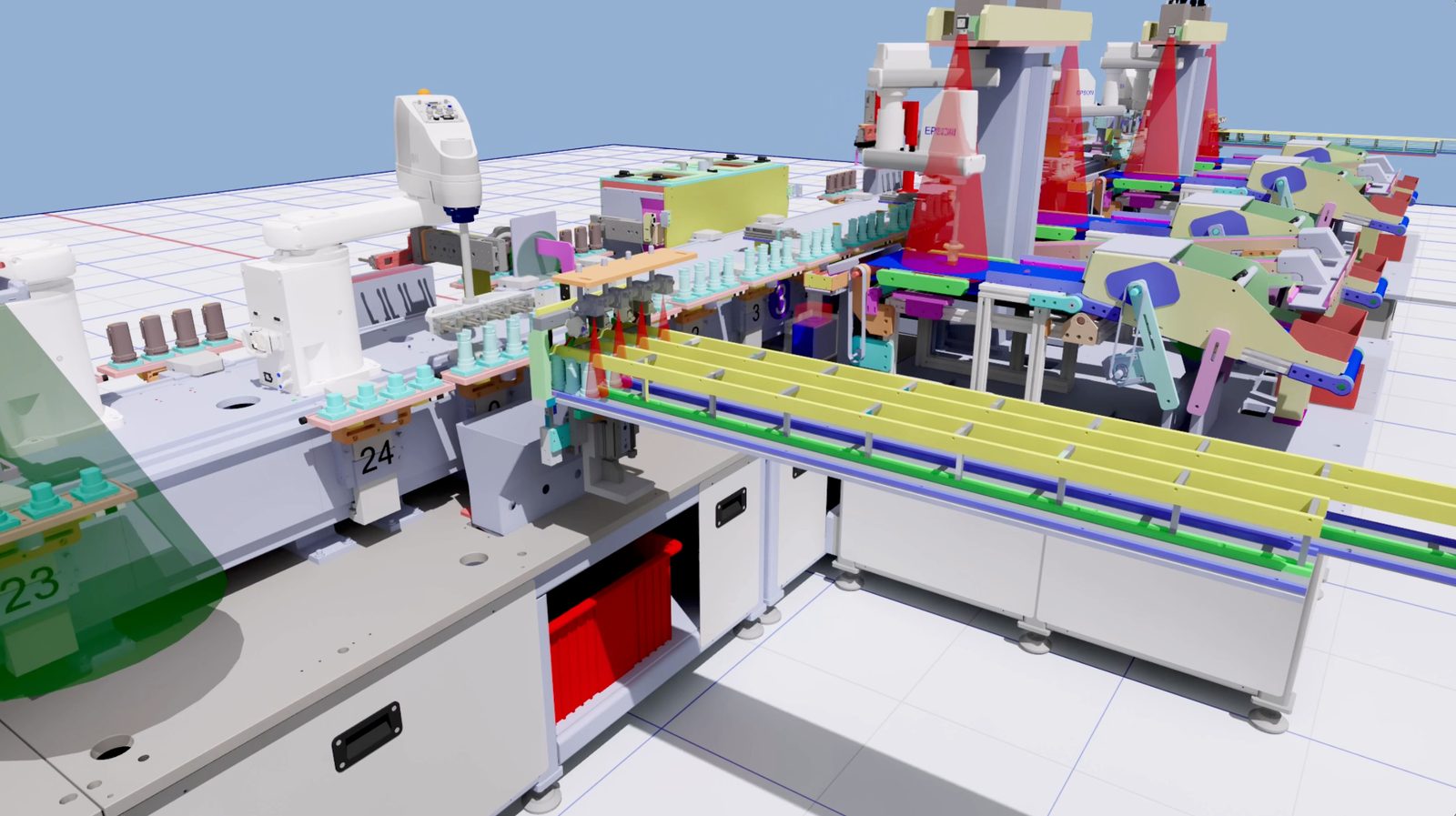
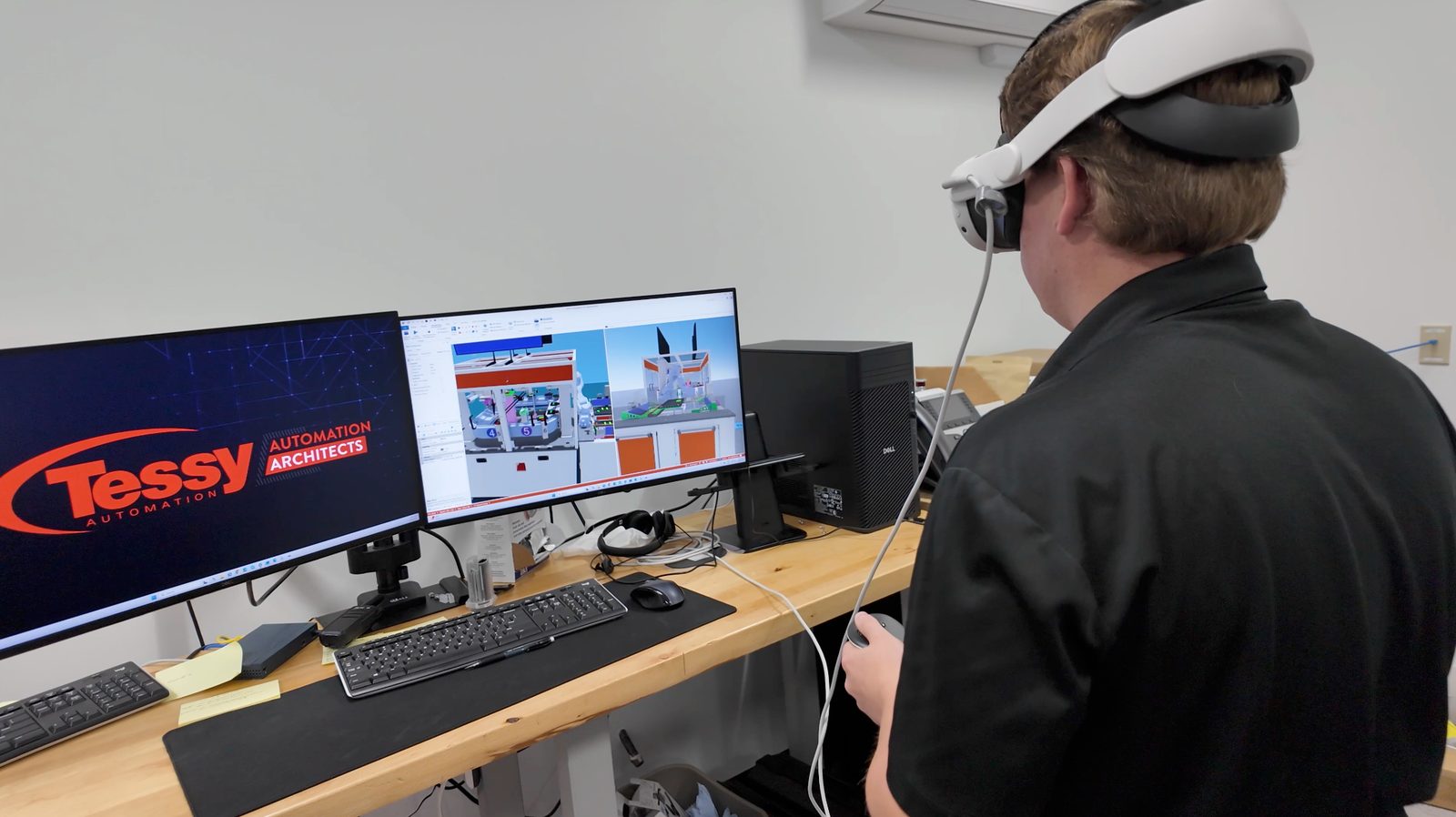
The most expensive place to find a design problem is on the factory floor, so we start looking much earlier. Using Rockwell Automation’s Emulate3D digital twin software, our engineers can build a functional virtual model of the entire assembly system, connect real PLC logic to it, and run full sequences before the hardware is ever powered. Controls issues come to light in a controlled virtual environment, while they are still inexpensive to solve.
Real Logic, Virtual Machine
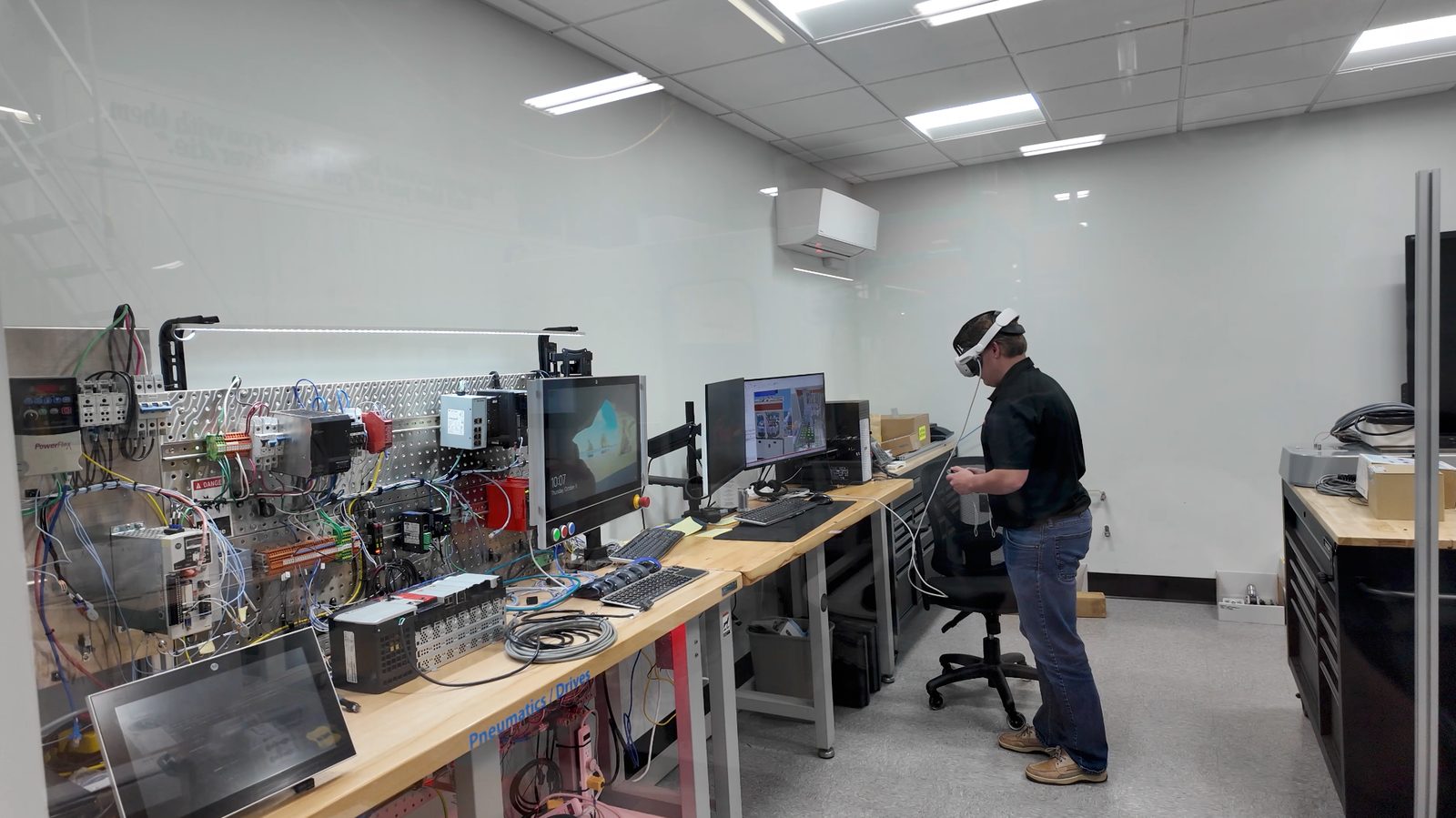
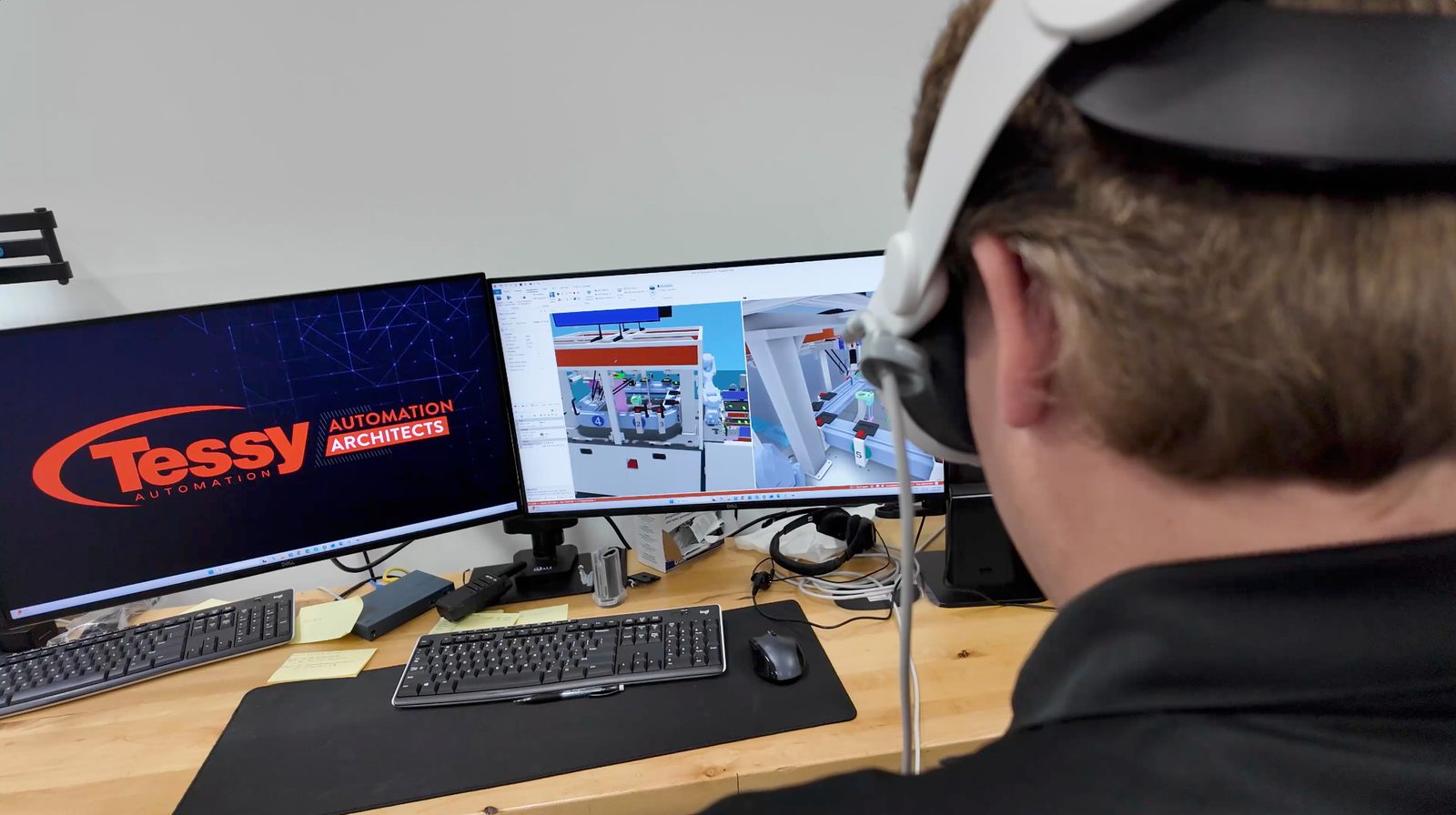
Our digital twin is a functional test environment, not a demo model. Studio 5000 PLC code runs on emulated controllers using FactoryTalk Logix Echo. Emulate3D simulates the equipment those controllers will run, including conveyors, independent carts, robots, sensors, actuators, and mechanical timing. The FactoryTalk Optix HMI connects to the same virtual system, so HMI development can progress with live tag data.
What We Validate
Running live PLC code against the model lets us validate logic before power-up and commissioning begin, including:
- Station state machines and sequences
- Interlocks and permissives
- Fault handling and recovery
- Pallet memory logic
- Cross-station handshakes
- Buffer logic and line flow
- Alarm annunciation
More Iteration. Less Schedule Pressure.
A virtual machine resets and restarts instantly, with no physical homing, no clearing in-process parts, and no waiting on mechanical recovery. We can iterate without consuming material or generating scrap, and real parts are not introduced until we are confident in the sequence logic. Controls work can also progress in parallel with the mechanical build. Engineers can debug before equipment arrives, validate multi-engineer coordination earlier, and test integration between independent chassis.
By debugging offline, we can reduce unknowns at power-up, shorten on-machine debug time, decrease schedule compression risk, and improve readiness for factory acceptance testing. Validating interlocks early also reduces crash risk, protecting hardware, time, and budget.
Understand Rate Before Power-Up
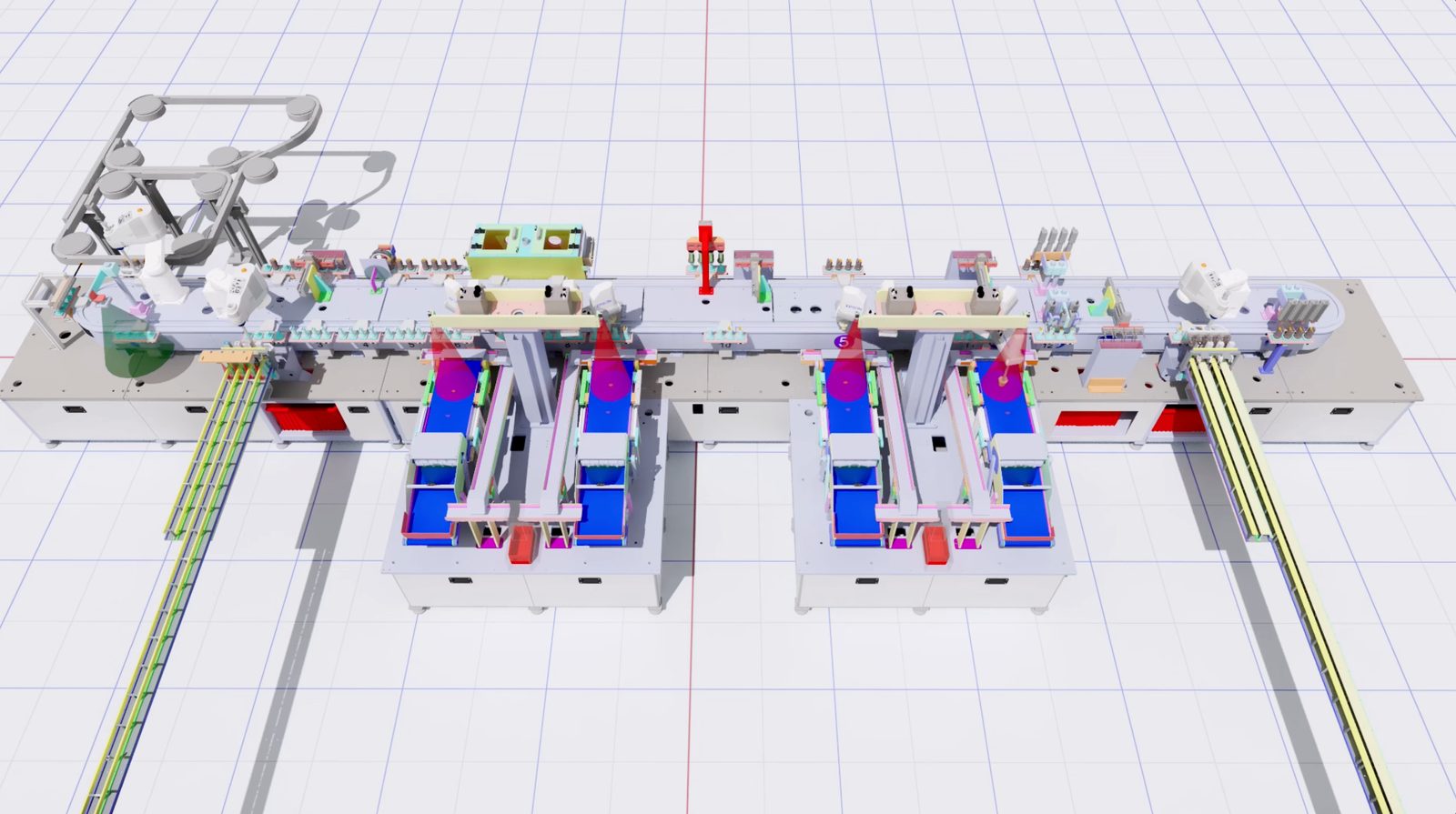
The digital twin also shows how individual station performance affects the whole system. Using Emulate3D for throughput analysis, we can study how station timing influences total system rate, identify bottlenecks early, test throughput improvements without risking hardware or material, and make data-driven cycle time decisions before power-up. Throughput becomes something we can evaluate early, not hope for later.
What the Model Has Already Caught
Running live PLC code against our digital twin has already exposed logic gaps and opportunities for optimization that would otherwise have waited until commissioning. Issues caught and resolved in the model include:
- Incorrect station-to-station handshake timing
- State machines not properly resetting during fault recovery
- A state machine deadlock under a rare edge condition
- Pallet data not updating under specific conditions
Improvements identified and implemented include:
- Independent cart locations and release sequence optimized for throughput
- Robot pathing and timing optimizations
A Defined Project Phase
Not every project needs a digital twin, so we use one where it fits. When a project calls for one, offline debug runs as a planned phase rather than an experiment, with defined checklists, established station readiness criteria, and formalized pre-commissioning validation.
A Different Kind of Commissioning
Commissioning is where mechanical variability, electrical integration, and real-time schedule pressure come together. With Emulate3D, we intentionally take one of those variables out of the equation.
The goal is simple: by the time we power up the machine, the logic shouldn’t be brand new. It should have already run. It should have faulted. We should have forced it into bad states and recovered from them. The HMI shouldn’t be seeing real tags for the first time. Commissioning becomes less about discovering problems and more about confirming that the system behaves the way we expect it to.
Next Steps
Contact us to discuss your next automation project and how a digital twin can help find problems before power-up.
Emulate3D, FactoryTalk, FactoryTalk Logix Echo, FactoryTalk Optix, and Studio 5000 are trademarks of Rockwell Automation, Inc.